“Terroir” a delicious French word that means “a taste of a place”. At its core, terroir highlights the idea that the unique combination of soil, climate, and environment where the grapes are cultivated leaves an unmistakable mark on the wine that cannot be replicated elsewhere. Much like how an olive grown in Tuscany carries a distinct flavour different from one grown in southern Spain, Tuscan grapes—whether Sangiovese, Vernaccia, or any of the other famed varietals—are shaped by Tuscany’s rolling hills, rich soils, and Mediterranean weather. Saying, “This wine exudes the terroir of Tuscany” is really just an elegant way of noting, “This wine tastes like it could only have been made in Tuscany.”
Terroir also plays a fascinating role in honey production. Like wine and cheese, the environment where the honey is produced—such as the soil, climate, and local flora—can influence its flavour and characteristics. Honey bees collect nectar from various flowers, tree sap and the mix in a specific region creates a unique flavour profile for the honey. For example, honey produced in a region with a lot of wildflowers will have a distinctive candyfloss flavour, while honey from an area with woodlands will have a more complex caramel taste.
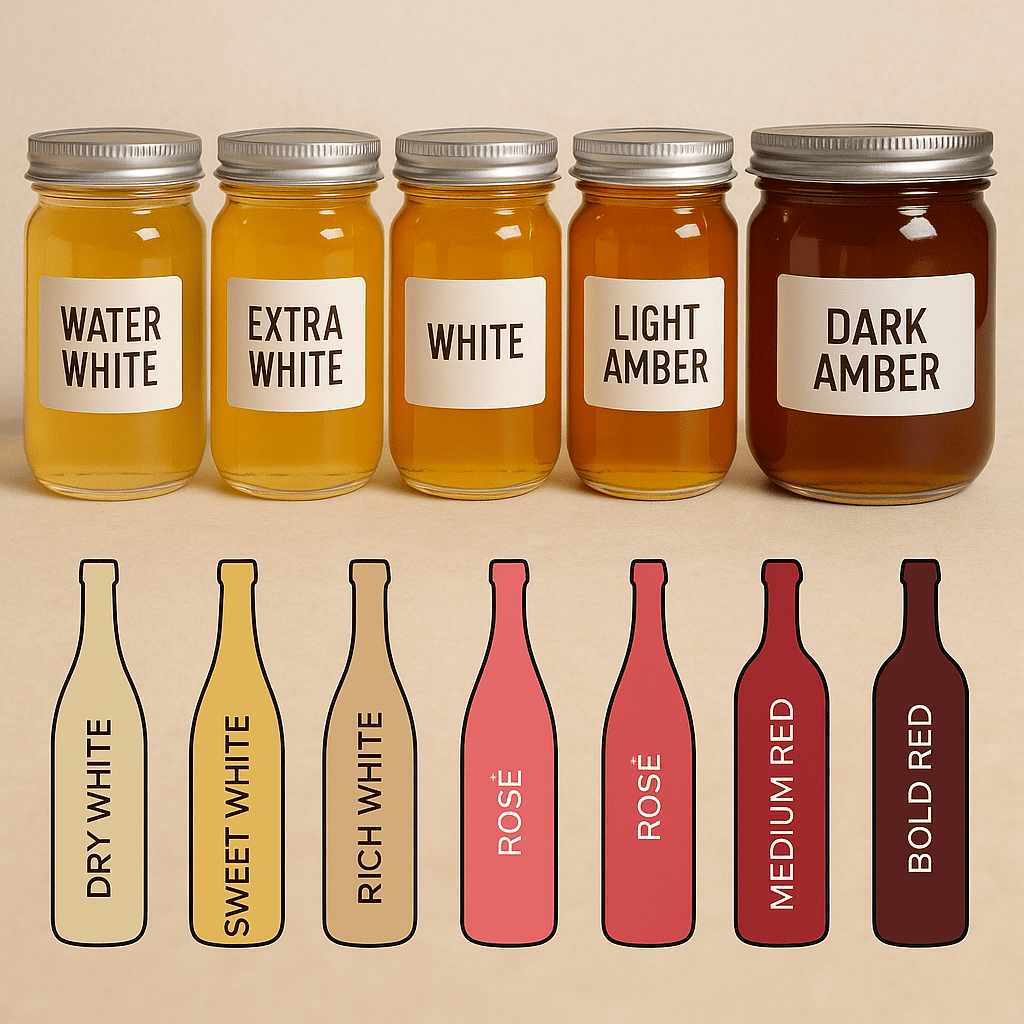
The similarity in the colour range of wine and honey is fascinating, as both exhibit hues influenced by their origin and composition. Where white grapes produce white wine, and red grapes create red wine, showcasing the natural diversity shaped by their source. This parallel between honey and wine reflects the unique beauty of nature’s palette.
For honey:
- White to pale amber: Often from floral sources like clover or acacia.
- Amber to golden hues: Common with wildflower or sunflower honey.
- Darker amber to brown: Richer, more robust flavours, like buckwheat or chestnut honey.
For wine:
- White to pale gold: Common in young white wines like Sauvignon Blanc or Pinot Grigio.
- Amber hues: Appear in aged white wines or orange wines.
- Ruby red to deep brown: Found in red wines, with brown tones emerging as they age, such as in older Rioja or vintage Port.
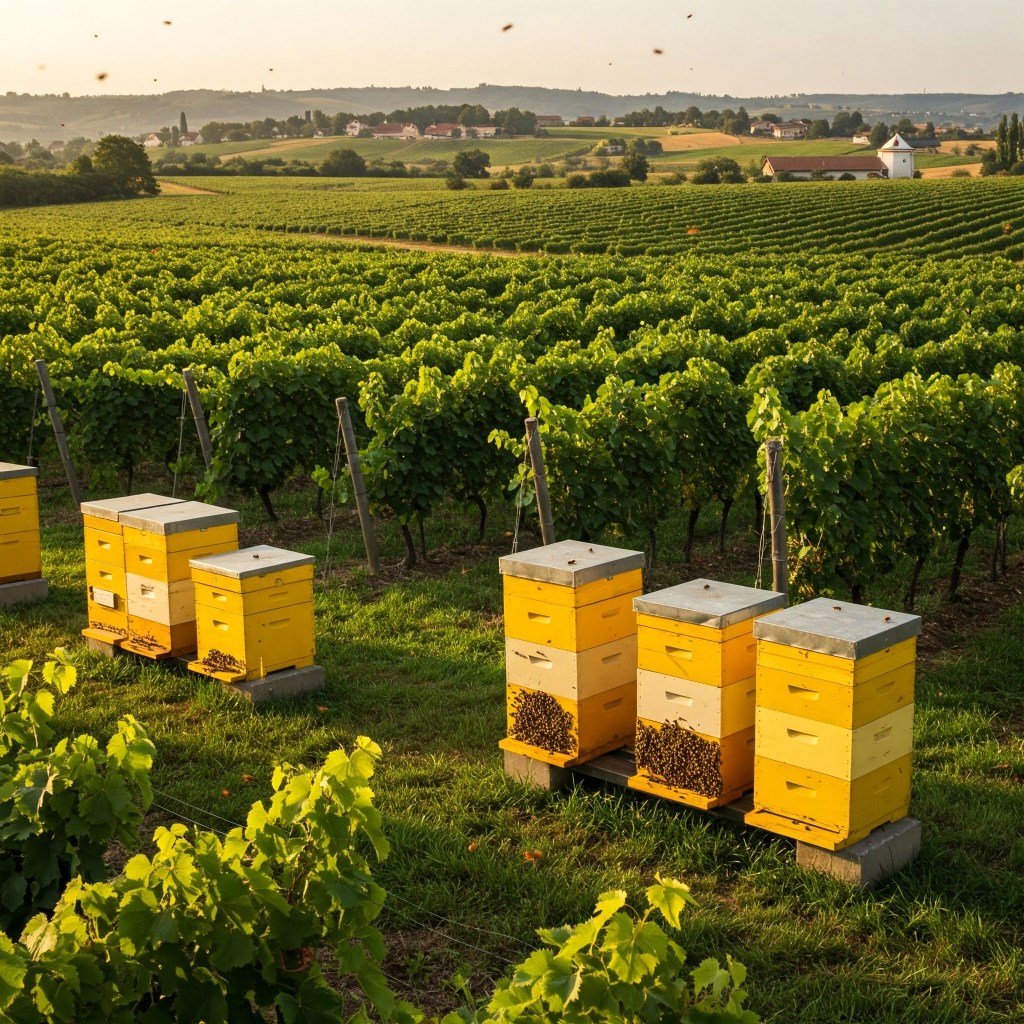
Beekeepers often place hives near or even within vineyards. Although grapevines are primarily pollinated by the wind, the presence of bees supports the surrounding flora, such as cover crops and wildflowers, which in turn can enhance soil health and overall biodiversity in the vineyard. Many winemakers embrace beekeeping as part of their sustainable practices. In some cases, wineries even maintain on-site hives to produce honey that reflects the unique terroir of the region, linking the flavours of both wine and honey.
Umami
Umami is the savory “fifth taste” (alongside sweet, salty, sour, and bitter) that gives foods like mushrooms, tomatoes, soy sauce, and aged cheeses their rich flavor. It’s driven by compounds like glutamates.
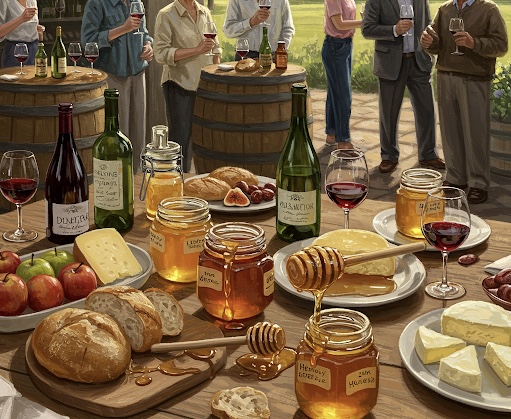
A product’s terroir can influence the intensity or presence of umami flavours and while they come from distinct concepts, terroir can play a role in enhancing the umami characteristics of foods. See my example honey food-pairing sensory menu easily adjusted for participants budget and location being indoors or outdoors.
We should savour wine, cheese, honey and also chocolate slowly, avoid an eating frenzy by consuming too much too quickly but more of a mindful experience and appreciate every nuance, flavour with quality over quantity! Buzz into my 🍯Honey & Bubbles Instagram.
 Sensai~teacher of AI
Leave a comment